
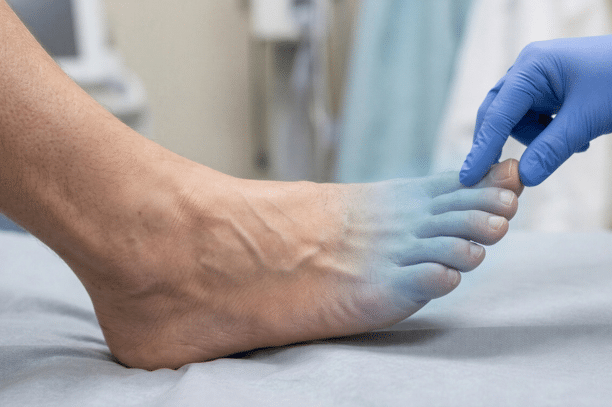
Seeing your toes turn blue or purple can be unsettling, especially if the color change happens without an obvious injury. Sometimes the cause is temporary and relatively harmless, such as exposure to cold. In other cases, discoloration can be a sign that blood is not reaching the toes as it should.
The pattern matters. If your toes change color briefly when you are cold and return to their usual appearance after warming up, a condition such as Raynaud’s may be involved. If the discoloration persists, affects one foot more than the other, or occurs alongside pain, numbness, coldness, or sores, reduced circulation deserves closer attention.
Understanding what can cause changes in toe color can help you recognize when it is time to have your circulation evaluated.
What Causes Toes to Turn Blue or Purple?
The color of your toes is influenced by the amount of blood flowing through the small blood vessels near the surface of your skin. When blood flow changes, the skin can look different.
Cold temperatures can temporarily narrow small blood vessels and cause the toes to become pale, blue, or purple. Raynaud’s disease is one example. According to Mayo Clinic, Raynaud’s can cause the fingers or toes to become cold and numb and change from white to blue when small blood vessels narrow in response to cold or stress. The color generally improves as the area warms and blood flow returns.
Reduced circulation from peripheral artery disease, or PAD, is another possible explanation. PAD occurs when arteries supplying the legs and feet become narrowed, often because of plaque buildup. Unlike a temporary response to cold, circulation problems caused by narrowed arteries can produce ongoing changes in the appearance and temperature of the foot.
Could Blue or Purple Toes Be a Sign of PAD?
They can be. PAD does not always cause obvious symptoms, but changes in the feet can provide an important clue.
The National Heart, Lung, and Blood Institute lists a pale, discolored, or blue foot or leg among the possible symptoms of PAD. Other symptoms can include a foot that feels colder than the other, numbness or weakness, leg pain with walking, and sores on the feet or toes that heal slowly or do not heal.
Color changes become more concerning when they occur alongside other circulation symptoms. For example, you may notice that one foot is consistently colder than the other, your toes look different after walking, or a sore on your foot is taking longer than expected to heal.
These symptoms do not automatically mean you have PAD, but they are worth discussing with a healthcare provider.
When Cold Temperatures May Be the Explanation
If your toes change color only when you are exposed to cold or during periods of stress, the cause may be different from plaque buildup in a larger artery.
With Raynaud’s, the small blood vessels in the toes temporarily constrict. The affected toes may become cold and numb and change color. Once blood flow improves, the toes may return to their normal appearance, sometimes with tingling or a throbbing sensation.
A recurring pattern of color changes does not necessarily mean something is seriously wrong. However, new or increasingly severe episodes should still be discussed with a healthcare professional, particularly if you develop sores, significant pain, or other changes in your feet.
What Other Symptoms Should You Watch For?
Toe discoloration is more useful as a warning sign when considered alongside other symptoms. Pay attention to changes that occur at the same time, including:
- Persistent coldness in one foot
- Numbness or tingling
- Pain in the foot or leg
- Weakness when walking
- Skin that becomes unusually pale or blue
- Sores that heal slowly
- Changes in toenail or hair growth
- Increasing sensitivity or pain in the toes
A combination of these symptoms may warrant an evaluation of the blood flow to your legs and feet.
How Are Circulation Problems Diagnosed?
If your toes repeatedly turn blue or purple, your healthcare provider may examine your feet and ask when the color changes occur. They may check skin temperature, pulses, sensation, and whether sores or other skin changes are present.
When reduced blood flow is suspected, testing may include:
- Ankle-brachial index (ABI): Compares blood pressure at the ankle and arm to assess circulation.
- Doppler ultrasound: Uses sound waves to evaluate blood flow through blood vessels.
- Vascular imaging: May help identify narrowed or blocked arteries when additional detail is needed.
The appropriate tests depend on your symptoms, medical history, and examination findings.
When Should You Seek Medical Attention?
Make an appointment if toe discoloration keeps returning, lasts longer than expected, or occurs with pain, numbness, coldness, or wounds that are slow to heal.
Seek emergency care for sudden, severe symptoms, particularly if a toe or foot suddenly becomes very painful, cold, pale or blue, or loses sensation. These changes can indicate an abrupt reduction in blood flow that needs immediate assessment.
Don’t assume persistent discoloration is simply a reaction to cold, especially if it affects one foot or is accompanied by other symptoms.
What Can Help Protect Circulation?
The right approach depends on the underlying cause. If PAD is diagnosed, your care team may recommend managing cardiovascular risk factors, including smoking, high blood pressure, high cholesterol, and diabetes.
Avoid smoking, protect your feet from injury, and seek care for wounds that are not healing. If cold triggers your symptoms, keeping your feet comfortably warm may help, but recurring or severe color changes still deserve medical evaluation.
At Advanced Cardiovascular Specialists, a cardiovascular evaluation can help determine whether your symptoms may be related to circulation and what further assessment may be appropriate.
Don’t Ignore Persistent Toe Discoloration
Blue or purple toes can have several causes, including cold-related blood vessel changes and reduced circulation. The duration of the discoloration, whether it affects one or both feet, and the presence of other symptoms can help guide an evaluation.
If your toes repeatedly change color or you notice pain, numbness, unusual coldness, or slow-healing sores, talk with your healthcare provider. Sudden, severe changes need emergency attention.
At Advanced Cardiovascular Specialists, a cardiovascular evaluation can help determine whether your symptoms may be related to a circulation problem and whether further testing is needed. color with your healthcare provider can help determine whether your symptoms warrant cardiovascular or vascular evaluation.
 What Does “Mild Cardiomegaly” Mean on a Chest X-Ray?